Pressure cookers overcook food primarily because they operate at significantly higher temperatures than conventional boiling, dramatically accelerating the cooking process. This intense heat, driven by increased pressure within a sealed environment, requires precise timing and careful depressurization. Failing to account for this rapid heat transfer often results in mushy textures and disappointing dishes.
Ever pull the lid off your pressure cooker, excited for a quick, delicious meal, only to find your veggies are mush, or your chicken is dry and stringy? Ugh, it’s the worst feeling, isn’t it? Many of us have been there, myself included, wondering why our amazing time-saving gadget seems to have a secret agenda to turn our food into… well, overcooked sadness. If you’ve ever thought, “My pressure cooker overcooks food way too often,” you’re definitely not alone. It’s a common frustration, but here’s the good news: it’s not your cooker’s fault, and it’s totally fixable! The truth is, your pressure cooker is doing exactly what it’s designed to do, just perhaps a little *too* efficiently for our traditional cooking habits.
The core issue isn’t a defect; it’s a misunderstanding of how this powerful appliance works. We tend to apply stovetop cooking times, or even oven times, to a method that operates on a completely different scientific principle. That higher temperature and pressure mean your food cooks incredibly fast, often much faster than you anticipate. Let’s dive into why this happens and, more importantly, how you can stop your pressure cooker overcooking food forever.
So, what’s the real science behind why my pressure cooker overcooks food, and how can I stop it?
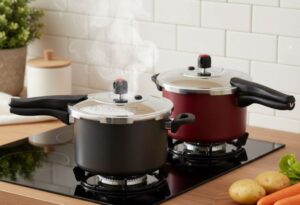
The magic (and sometimes the mayhem) of a pressure cooker boils down to one key thing: temperature. When you seal that lid and the pressure builds, something incredible happens to the boiling point of water. Normally, water boils at 212°F (100°C) at sea level. But inside a sealed pressure cooker, the increased pressure forces the boiling point to rise significantly, often to around 240-250°F (115-121°C). This might not sound like a huge difference, but it’s a game-changer for cooking.
Think of it this way: cooking is essentially a series of chemical reactions, and these reactions speed up dramatically with higher temperatures. That extra 30-40 degrees Fahrenheit means your food cooks much, much faster. Plus, the superheated steam penetrates food very efficiently, cooking it evenly from all directions. This combination of higher temperature and rapid steam penetration is why your dishes can go from perfectly done to overcooked mush in mere minutes, sometimes even seconds!
Common Reasons Your Pressure Cooker Overcooks Food (and how to fix them):
- Misjudging Cook Times: This is the biggest culprit. We often use recipes designed for conventional cooking, or we just guess. I remember my first time making black beans; I gave them a “safe” 15 minutes, only to open the lid to a pot of bean paste! My mistake was not drastically reducing the cook time.
- My Tip: Always start with a much shorter cook time than you think. For many foods, you’ll need to cut conventional times by 50-70%. Look up specific pressure cooker recipes or charts. It’s better to slightly undercook and add a minute or two than to overcook.
- Not Accounting for “Carryover Cooking”: Food doesn’t instantly stop cooking when the heat is off. Especially with a natural pressure release (NPR), the internal temperature remains high, and the food continues to cook for several minutes.
- My Tip: For delicate foods like vegetables, fish, or anything you want with a bit of bite, use a “quick release” (QR) to stop the cooking process immediately. For larger cuts of meat, stews, or dried beans, natural release works great, but factor those extra minutes into your initial cook time. If a recipe calls for 10 minutes NPR, your food is cooking for those 10 minutes!
- Too Much Liquid: While pressure cookers need liquid to create steam, using too much can make food watery and contribute to a mushy texture, especially with grains like rice or quinoa. My first batch of pressure cooker rice was a sticky, gloopy mess because I used my stovetop ratio!
- My Tip: Many pressure cooker recipes use less liquid than conventional methods because hardly any evaporates. Stick to recipe guidelines, and for rice, a 1:1 or 1:1.25 rice-to-water ratio is often perfect.
- Ignoring Food Type and Size: A small, tender piece of broccoli will cook much faster than a large, tough potato. Uniformity is key.
- My Tip: Cut your ingredients into similar-sized pieces for even cooking. For mixed dishes, consider adding faster-cooking vegetables later, or use the “pot-in-pot” method to cook them separately above the main dish.
My journey with pressure cooking has been a series of triumphs and, admittedly, a few overcooked disasters. But each time, I learned. Now, I love how my pressure cooker makes meals so fast, from perfectly tender chicken to fluffy rice and melt-in-your-mouth pot roasts. The key is embracing its power, respecting its speed, and always, always cutting down those cook times. You’ll be amazed at the difference a minute or two can make!
So, next time you’re about to fire up your pressure cooker, remember these tips. Don’t be afraid to experiment, start with shorter times, and trust your instincts. Your pressure cooker is a fantastic tool, and with a little understanding, you’ll be consistently turning out perfectly cooked, delicious meals every single time. Happy cooking!