You’ve probably seen a viral kitchen hack telling you to “put aluminum foil in your dishwasher for cleaner dishes.”
At first glance, it sounds strange, why would you toss a piece of metal into an appliance full of water and electricity? Yet, thousands swear that this simple trick makes dull cutlery shine like new.
Behind this trend lies real science, not just online hype. Aluminum foil reacts with certain dishwashing detergents and minerals in water, helping to reduce tarnish and residue buildup on silverware. When done correctly, it can make your utensils gleam brighter than a regular wash ever could.
However, it’s not as simple as throwing a ball of foil anywhere inside. Knowing why it works, how to do it safely, and when not to try it is essential.
This guide dives deep into the chemistry, safety, and long-term effects of using aluminum foil in your dishwasher, so you can decide if this viral cleaning trick is worth it.
By the end, you’ll understand exactly how foil interacts with dishwashing elements, how to use it properly, and how to keep your cutlery shining without causing damage to your appliance.
Why People Put Aluminum Foil in the Dishwasher
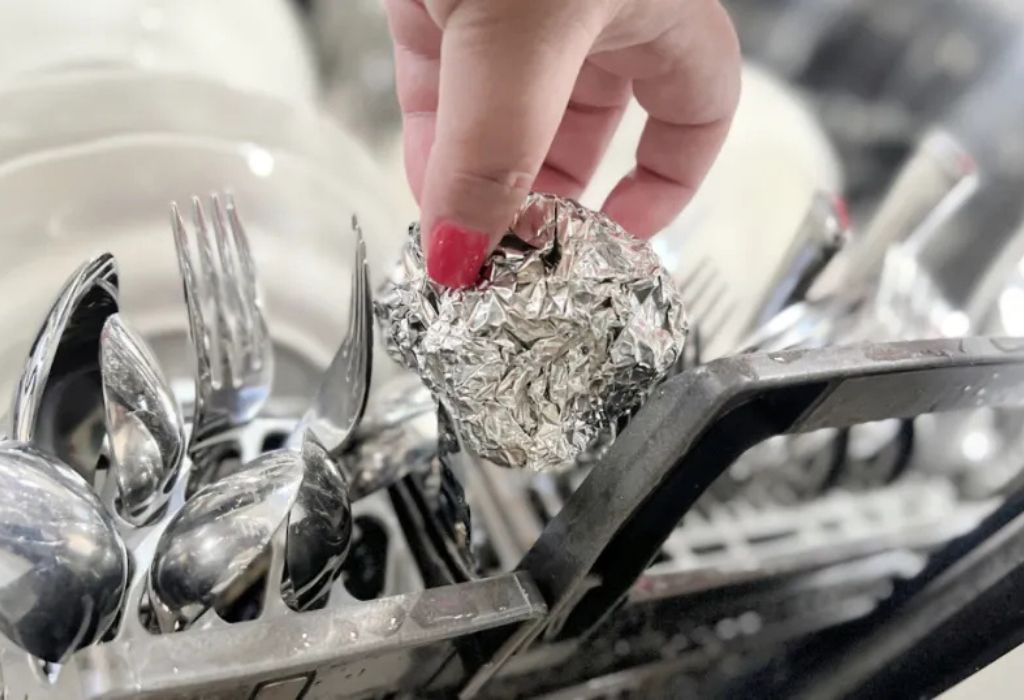
The trend of putting aluminum foil in the dishwasher gained popularity through online kitchen hack videos. Users claimed that a small ball of foil helps brighten silverware and remove dull stains. The idea quickly spread, leaving many wondering how it could possibly work.
When silverware dulls over time, it’s often due to chemical reactions with sulfur compounds in food and detergent. Aluminum, being more reactive, helps reverse this process. It attracts tarnish-causing particles away from silver-plated utensils, leaving them clean and shiny.
Another reason people use foil is to reduce water spots and detergent film. The foil slightly alters the ionic balance in the dishwasher water, helping minerals detach more easily from surfaces.
While this method won’t repair scratched cutlery or permanently remove deep tarnish, it’s an easy, inexpensive way to restore brightness during regular cleaning. When used with caution, it’s safe, effective, and surprisingly satisfying to watch the results.
How the Aluminum Foil Trick Works
The magic behind this hack lies in a simple chemical reaction. Aluminum foil interacts with the alkaline chemicals in dishwasher detergent and the ions in water. This process helps lift tarnish, a thin layer of corrosion, from metal surfaces.
During the wash cycle, hot water, detergent, and aluminum create a mild electrochemical charge. This charge encourages tarnish molecules from silverware to bond with aluminum instead. It’s essentially a mini “ion exchange,” restoring the original shine to silver or stainless steel.
Foil also acts as a mild abrasive when water circulates, helping to scrub away light film buildup without scratching. As the cycle ends, utensils emerge cleaner, shinier, and free of dull gray streaks.
The process works best with silver-plated flatware or stainless steel cutlery but isn’t necessary for aluminum utensils, as it may cause discoloration.
Does aluminum foil really clean silverware?
Yes, the reaction between aluminum and detergent removes tarnish and improves shine.
Can foil damage my dishwasher?
Not if used properly — just ensure it’s crumpled and secured to avoid blocking spray arms.
Should I wrap silverware in foil?
No, place a small ball of foil in the utensil basket; wrapping can trap debris.
Does the trick work on all metals?
It works on stainless steel and silver-plated items but not pure aluminum.
How often can I use foil in the dishwasher?
Once or twice a month is enough to maintain shine without overuse.
Step-by-Step Guide: How to Use Aluminum Foil in Dishwasher
Using foil correctly makes all the difference between success and damage. Follow these steps to do it safely:
- Tear a small square of foil about 10 inches long.
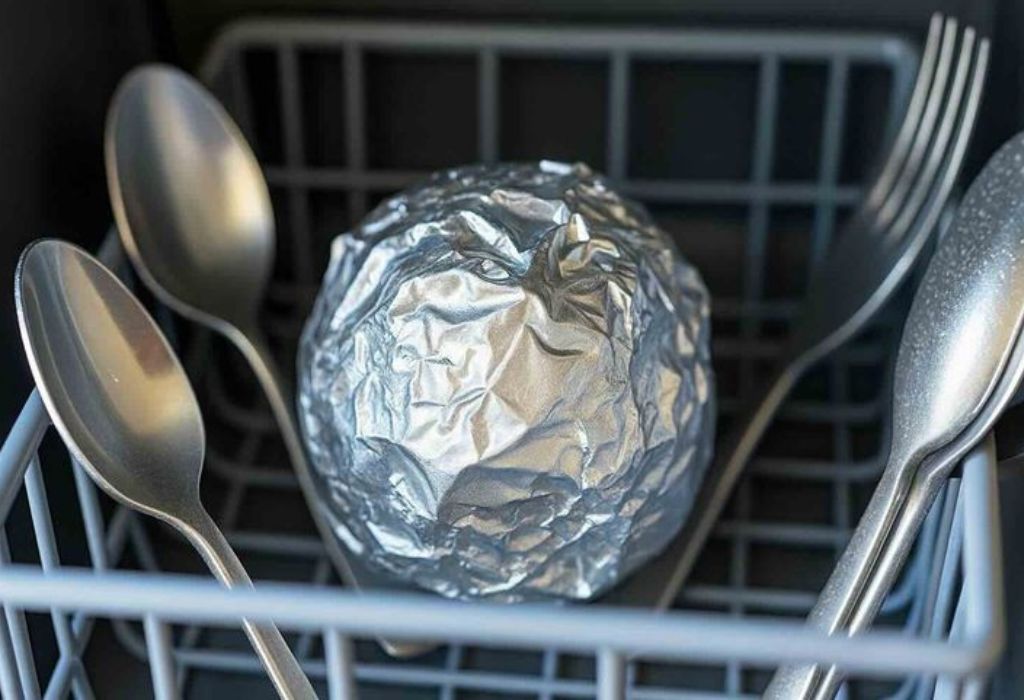
- Crumple it gently into a loose ball — not too tight, so water can pass through.
- Place the foil ball in the cutlery basket or utensil tray, not on the heating element or near the detergent pod.
- Load dishes as usual, ensuring nothing blocks the spray arms.
- Add detergent and run a regular or hot cycle.
- Inspect your cutlery at the end — you’ll notice noticeably shinier silverware.
This method enhances the effectiveness of standard detergent without any extra chemicals. For even better results, use high-quality detergent with built-in rinse aid and ensure your water temperature reaches at least 120°F (49°C).
When It’s Safe to Use Aluminum Foil in Dishwasher
Aluminum foil is safe for most dishwashers when used properly. However, it’s crucial to know where and how to place it. Always position the foil away from heating elements to prevent melting or scorching.
It’s particularly effective for loads that include silverware, stainless utensils, or tarnished cutlery. Avoid using foil with non-metal dishes like ceramic or glassware only, as it won’t add any cleaning benefit there.
If your dishwasher has a sanitize or extra-hot cycle, this trick works even better. Higher temperatures strengthen the electrochemical effect that draws tarnish from utensils.
Make sure to avoid foil if your dishwasher uses strong chlorine-based detergent, this combination can cause unwanted reactions and black residue. Stick to regular or eco-friendly detergents for the best results.
When You Shouldn’t Use Aluminum Foil in Dishwasher
Although safe in most cases, aluminum foil isn’t suitable for every situation. Avoid this trick if your load contains nonstick cookware, anodized aluminum pans, or delicate coated utensils. The foil’s chemical reaction might dull finishes or cause discoloration.
Never let foil touch heating elements or walls of the tub during cycles. The high temperature may cause it to melt and stick to the surface, leaving permanent marks.
If your dishwasher uses an exposed heating coil, it’s better to skip this method entirely. The risk of heat damage is higher compared to hidden-element models.
You should also avoid using foil frequently. Excess aluminum exposure may affect dishwasher sensors or filters over time. Limiting it to once or twice monthly ensures long-term safety and results.
Benefits of Using Aluminum Foil in Dishwasher
The biggest reason people try this hack is visible — sparkling silverware. Dull spoons and forks regain their luster without polishing. But there’s more behind this trick than appearance alone.
Foil helps neutralize mineral deposits from hard water, reducing cloudy residue and streaks. It can also enhance detergent performance by balancing water pH and reducing static buildup that causes spotting.
This trick is budget-friendly and chemical-free. Unlike silver polish or specialized cleaning tablets, aluminum foil costs almost nothing and requires no extra tools.
Another subtle benefit is odor reduction. Foil attracts sulfur-based compounds responsible for metallic or musty smells inside the dishwasher. After one cycle, the air inside often smells fresher and cleaner.
Finally, it helps maintain your dishwasher’s internal components by minimizing tarnish and residue buildup, especially in households with hard water.
Does aluminum foil remove rust stains too?
No, it primarily removes tarnish, not rust. Use vinegar or a rust remover for that.
Can I reuse the same foil ball?
Yes, for 2–3 cycles until it darkens or breaks apart.
Will foil make my dishes shinier too?
It mostly affects metal utensils, but may slightly reduce spots on glassware.
Does it help with hard water stains?
Yes, it reduces mineral buildup, especially on stainless-steel utensils.
Is it safe for eco-mode cycles?
Yes, but results are stronger with regular or high-heat washes.
Science Behind the Aluminum Foil Reaction
The foil hack works because of an electrochemical reaction. Inside your dishwasher, aluminum acts as a reactive metal that attracts ions from tarnished silver. This process reverses the dull oxidation layer and restores brightness.
When aluminum contacts water, detergent, and heat, it releases charged particles that bond with sulfur molecules in tarnish. These molecules shift from the silverware to the aluminum foil, revealing cleaner surfaces underneath.
The foil essentially becomes a sacrificial material, absorbing the compounds that cause dullness. It’s the same principle behind using aluminum in jewelry cleaning solutions.
Since this is a chemical reaction, you’ll sometimes notice the foil turning darker after the cycle. That’s a good sign — it means it’s working.
This process doesn’t damage metal surfaces because it doesn’t rely on abrasives or acids, making it safer than scrubbing or polishing.
Myths and Misconceptions About Foil in Dishwashers
Not everything you hear online about aluminum foil in dishwashers is accurate. Some viral claims exaggerate its benefits, while others spread unnecessary fear.
Myth 1: Foil makes dishes cleaner.
In reality, it primarily brightens silverware; it won’t make plates or plastic containers sparkle.
Myth 2: Foil will damage your appliance.
If placed correctly, foil is harmless. Damage occurs only when foil touches heating elements or delicate coatings.
Myth 3: Any foil piece works.
It must be a clean, food-safe aluminum sheet — not coated or colored foil, which can release residues.
Myth 4: The more foil, the better.
Wrong. A single small ball is enough. Using too much can interfere with water flow.
Understanding these myths helps you use the trick safely without risking your dishwasher’s performance.
Eco-Friendly Alternatives to Aluminum Foil Trick
While the foil method is safe when used sparingly, there are greener alternatives that produce similar results. Natural cleaners like white vinegar and baking soda can remove mineral buildup and odor effectively.
Vinegar dissolves hard water stains and soap scum, while baking soda deodorizes and polishes stainless steel surfaces. Combined, they create a natural fizzing action that freshens the dishwasher interior.
Citrus peels are another eco-friendly option. Running a cycle with lemon or orange peels helps cut grease and adds a pleasant scent.
For regular shine, rinse aid or specialized silverware brightening tablets are safer for frequent use. These products are designed to protect your dishwasher’s inner parts while maintaining brightness.
Using these natural alternatives keeps your cleaning routine sustainable without sacrificing results.
Is vinegar as effective as aluminum foil?
Vinegar cleans buildup and odor but doesn’t reverse tarnish like foil does.
Can I mix vinegar and baking soda in the same cycle?
Yes, but add vinegar first; baking soda goes in mid-cycle to prevent foam overflow.
Do citrus peels harm the dishwasher?
No, they’re safe and leave a natural scent, but avoid peels with wax coatings.
Are rinse aids eco-friendly?
Some are — choose biodegradable or plant-based formulas for sustainability.
Can I combine foil with vinegar?
No, mixing both may neutralize foil’s reaction and reduce effectiveness.
Safety Precautions When Using Aluminum Foil in Dishwasher
Although the trick is simple, using foil incorrectly can cause problems. Always use plain, uncoated aluminum foil, not decorative or non-stick types. Coated foil can melt or leave residue on utensils.
Avoid placing foil directly on the heating coil or touching the dishwasher walls. The high heat can melt thin foil and cause permanent marks.
Use only a small, crumpled ball, not sheets or strips that might block spray arms or drainage. Keep it in the utensil basket for stability.
Do not combine foil with bleach-based detergents. Aluminum reacts poorly with chlorine and can produce dark stains. Stick to mild or eco-friendly detergents instead.
If your dishwasher is new, check the manual first. Some manufacturers don’t recommend adding foreign objects to the tub, even small ones. Always prioritize safety over shortcuts.
Long-Term Effects of Using Aluminum Foil in the Dishwasher
While the aluminum foil trick works beautifully for making cutlery shine, frequent use can have subtle effects on both your utensils and your appliance.
Over time, repeated exposure to high heat and detergent can slightly degrade foil and leave tiny metallic traces that build up on internal surfaces. These deposits are usually harmless but may affect how the dishwasher senses water clarity in advanced models.
The foil may also darken or break apart after several cycles, leaving small flakes near the filter or drain area. Although these bits are soft and unlikely to cause harm, cleaning the bottom of your dishwasher occasionally ensures optimal water flow and hygiene.
Silver-plated utensils may show reduced tarnish buildup with moderate foil use, but excessive exposure could thin the plating over several years. To avoid this, limit the trick to once or twice a month instead of every load.
In homes with hard water, foil can actually help reduce limescale accumulation temporarily, but it doesn’t replace descaling treatments. Always pair the foil hack with routine vinegar or dishwasher-cleaner cycles for balanced maintenance.
By understanding these long-term effects, you can use the hack strategically, gaining the benefits of brighter utensils without risking wear on your dishwasher or flatware.
Common Problems When Using Foil and How to Fix Them
Even simple kitchen hacks can go wrong if done incorrectly. Aluminum foil in the dishwasher is no exception. Fortunately, most issues are easy to identify and resolve with a few quick adjustments.
One common issue is foil residue sticking to utensils. This happens when the foil is too thin or placed too close to the heating element. Switching to heavy-duty foil and positioning it securely in the cutlery basket prevents this.
Another frequent problem is water spots still appearing despite using foil. This usually means the rinse aid compartment is empty or your water heater is set too low. Refill rinse aid and ensure your water reaches at least 120°F for best results.
If you notice a gray film on glassware after trying the foil trick, don’t worry. The film is likely a detergent reaction rather than damage. Run a short vinegar rinse cycle to restore clarity.
Noise or rattling sounds can occur if the foil ball is too large or not wedged securely. Crumple a smaller piece and keep it in the utensil basket where it won’t move around.
Why did my foil turn black after a cycle?
That’s a normal reaction — it means the foil absorbed tarnish and mineral ions from the silverware.
Can foil scratch my stainless-steel utensils?
No, as long as the foil is crumpled loosely and doesn’t rub directly during the wash.
Why does my dishwasher smell metallic after using foil?
The reaction between detergent and foil can release a temporary metallic scent that fades after one rinse.
Should I remove foil immediately after the cycle?
Yes, to avoid moisture retention and ensure no bits remain near the drain.
Can I use foil in combination with rinse aids or detergent pods?
Absolutely — both enhance cleaning without affecting the foil’s reaction.
Conclusion
Putting aluminum foil in your dishwasher isn’t just a viral gimmick — it’s a clever cleaning hack rooted in real chemistry. When used safely and occasionally, it helps remove tarnish from silverware, neutralize water minerals, and enhance shine.
The electrochemical reaction between aluminum, detergent, and heat gently transfers dulling compounds from your cutlery to the foil, leaving your utensils polished and spotless.
This trick is inexpensive, easy, and chemical-free, making it a popular alternative to silver polish or rinse tablets. However, it’s not a miracle fix for rust or heavy buildup, nor should it replace regular cleaning habits. Moderation and proper placement are key to keeping your dishwasher safe and effective.
By combining this method with regular maintenance, like cleaning filters, using vinegar cycles, and checking spray arms, you’ll get professional-level results at home.
Whether you choose foil or natural alternatives, the goal is the same: cleaner, shinier, and healthier dishwashing.
So next time your cutlery looks dull, try the aluminum foil trick. It’s quick, eco-friendly, and satisfying, proof that sometimes, even the simplest ideas can deliver the brightest results.

I’m Emma J. Caldwell, the founder, lead writer, and home-cooking enthusiast behind KitchenGuideCo.com. With a background in culinary arts and over a decade of cooking experience in both professional and personal kitchens, I created this platform to demystify recipes, offer smart kitchen gadget reviews, and guide readers through meal prep with confidence and clarity.