Blending ice may seem simple — toss a few cubes into a blender, press a button, and enjoy a refreshing smoothie or frozen drink. But in reality, not all blenders are built for that task.
Some machines crush ice effortlessly into snow-like powder, while others rattle, jam, or even burn out their motors trying.
The question, can all blenders blend ice, is one that countless home users face after ruining a set of blades or smelling a faint burnt-motor scent mid-blend.
Ice may appear harmless, but it’s one of the toughest ingredients to handle in a kitchen appliance. Crushing it requires torque, blade design, and strong jar durability — features not all blenders share.
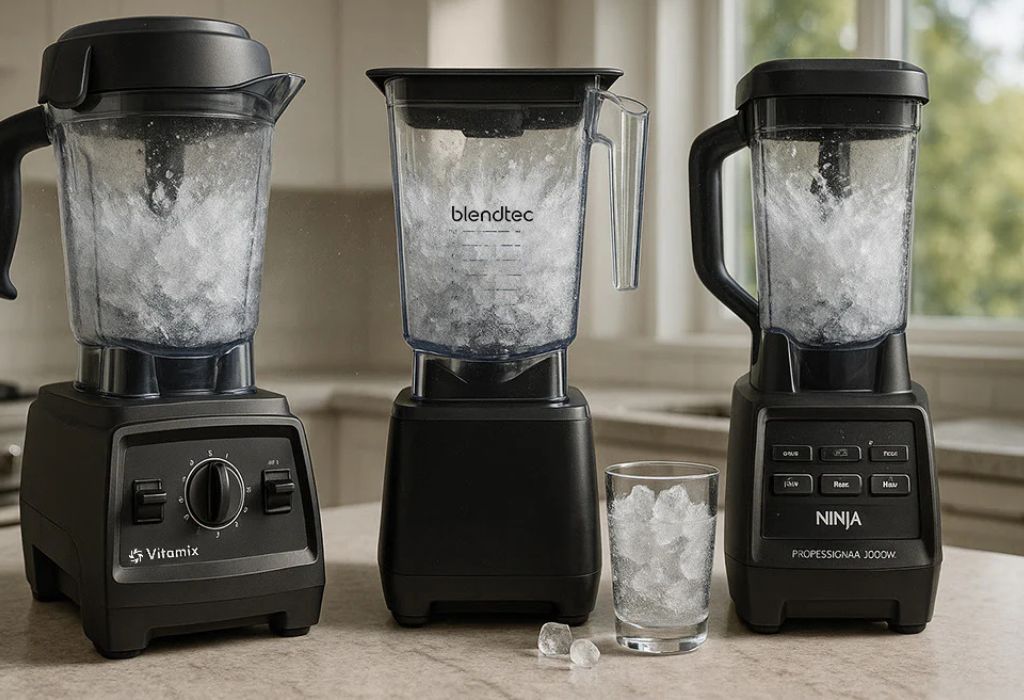
According to tests by Consumer Reports, high-performance blenders like Vitamix, Ninja, and KitchenAid can pulverize ice with minimal strain, while basic models struggle to break cubes evenly. (source)
The Science Behind Ice Blending
Crushing ice isn’t just about spinning blades; it’s a small feat of physics. When a blender encounters a solid like ice, it must exert force strong enough to fracture dense crystals while maintaining rotation speed.
Blenders with weak motors often slow down under pressure, causing uneven crushing and potential overheating. This happens because ice requires both impact power and consistent torque. Torque — the rotational force of the motor — determines how well the blades can maintain their momentum when hitting resistance.
High-power blenders (1,200 watts or more) generate enough torque to shatter ice quickly, while entry-level blenders (below 600 watts) can stall or dull their blades after repeated attempts. The blade design also plays a critical role.
Ice-ready blenders use hardened stainless-steel blades with angled tips to create vortexes that pull cubes toward the center for even crushing.
Jar design matters too. A wide-base jar helps ice circulate smoothly instead of clumping under the blades. Thick glass jars or BPA-free Tritan plastic resist cracking under temperature shock when blending ice straight from the freezer.
Every time you crush ice, thousands of micro-impacts hit the blades and jar. That’s why manufacturers like Ninja or Vitamix design both blades and motors to handle heavy mechanical stress over long periods.
The physics of ice blending are simple yet demanding: speed, torque, and blade geometry must work in harmony. Without all three, your blender risks damage long before your drink is ready.
Why Some Blenders Struggle with Ice
Not every blender can handle the solid density and temperature of ice cubes. Low-end or compact models are typically designed for softer ingredients like fruits, vegetables, or liquids. Their motors and blades aren’t reinforced to take on something as solid as frozen water.
The main reason many blenders fail is underpowered motors. When blades meet resistance they can’t overcome, the motor slows, heats up, or shuts off entirely.
Prolonged strain can strip gears, melt plastic couplings, or blow a fuse. The damage isn’t always immediate — sometimes blades become dull or misaligned over time.
Blade sharpness also makes a difference. Dull or thin blades can’t cut through ice; they just spin cubes around until friction melts them into water. Cheaper blades may bend or chip, leading to uneven results and safety risks.
Another factor is pitch angle — the tilt of the blades. Ice-crushing models have blades set at specific angles to maximize surface impact. A shallow angle causes cubes to bounce, while a steeper one pulverizes effectively.
Lastly, blender jars designed for general use are often thin or brittle, making them prone to cracking when exposed to extreme cold. The combination of vibration, pressure, and temperature change can lead to hairline fractures that worsen over time.
So when you see smoke, stalling, or strange grinding noises, that’s your blender crying for mercy. It’s not that it can’t blend ice at all — it just wasn’t born to. Understanding these limitations helps prevent costly repairs or replacements later.
Key Features of Ice-Crushing Blenders
If you’re shopping for a blender that can crush ice confidently, several design features separate the strong from the weak.
First, the motor power should be at least 1,000 watts for efficient ice crushing. This ensures the motor can sustain consistent torque without overheating. Professional blenders like the Vitamix 5200 and KitchenAid K400 use this power range to handle dense ingredients like ice and frozen fruit smoothly.
Next, focus on blade construction. Look for hardened stainless steel with multi-angle edges designed to slice, crush, and churn simultaneously. Some high-end blenders even have serrated or wing-tip blades for better contact with solid cubes.
The jar material is equally crucial. Glass jars are durable but heavier, while BPA-free Tritan plastic jars combine toughness with flexibility. Both materials resist cracking from temperature shock. Avoid thin or cheap plastic jars — they tend to cloud, warp, or crack under ice stress.
A pulse or ice-crush function adds more control. Rather than constant spinning, these functions deliver short bursts of high power, allowing the blades to reposition cubes and prevent clumping. This reduces strain and results in finer, more consistent texture.
Lastly, blade assembly security matters. A wobbly blade mount can loosen over time under the repeated stress of crushing ice. Solid metal couplings and sealed bearings keep everything stable and leak-free.
When all these factors align — powerful motor, angled blades, durable jar, and pulse control — you get a blender that can reduce ice to snow without breaking a sweat or a blade.
Testing Popular Blenders for Ice Crushing
Not all claims of “ice-crushing power” hold up under real-world conditions. Independent tests from sources like Consumer Reports and Good Housekeeping have consistently shown that only certain blenders handle ice efficiently without damage.
The Vitamix 5200 remains a benchmark for performance. With a 2-horsepower motor and hardened blades, it pulverizes ice cubes into fine snow in under 20 seconds. It’s expensive but built for longevity — many units last over a decade with daily use.
The Ninja Professional 1000 offers a more affordable solution. Its 1,000-watt motor and stacked six-blade system excel at ice and frozen drinks. The trade-off is slightly higher noise and occasional need to shake the jar mid-blend.
KitchenAid’s K400 sits comfortably in between. Made with die-cast metal housing and a 1.5-peak horsepower motor, it’s capable of consistent ice blending while maintaining aesthetic appeal. Users praise its sturdy build and intuitive speed control.
Budget blenders under 600 watts, like many personal or bullet models, often fail at this task. Their small motors and lightweight jars can’t generate enough impact force, leaving behind large chunks or causing overheat shutdowns.
The takeaway is simple: power and build quality matter far more than brand slogans. Investing once in a reliable, heavy-duty blender prevents recurring frustration and replacement costs.
If ice is a regular part of your recipes — smoothies, frappes, frozen cocktails — choose performance over price every time.
Tips for Blending Ice Safely and Effectively
Even with a capable blender, technique determines how smoothly your ice-crushing experience goes. Improper loading or sequencing can stress blades unnecessarily or lead to uneven results.
Start by adding liquid first, followed by ice last. Liquids help create movement, allowing ice to circulate freely rather than sticking to blades. This simple order dramatically improves blending efficiency.
Use smaller ice cubes whenever possible. Large blocks are harder on blades and motors. If you only have big cubes, wrap them in a towel and gently crack them with a rolling pin before blending.
Avoid overloading the jar. Leave about one-third of the space empty for proper circulation. Overfilling traps ice above the blades, forcing you to stop and stir frequently.
Engage the pulse button rather than continuous blending. Short bursts at high speed give blades time to reposition ice and prevent overheating.
Finally, inspect your blender regularly. Look for dull blades, leaks, or strange vibrations — all early warning signs of wear. If you notice cracks in the jar or burned motor smell, stop using it until inspected.
The best technique blends smart preparation with mechanical advantage. Combine those with the right blender, and you’ll never fear the ice again.
Blenders That Should Avoid Ice Completely
Some blenders just aren’t meant to meet the ice tray. Compact or low-power models — especially those under 500 watts — can suffer permanent damage from even light ice crushing.
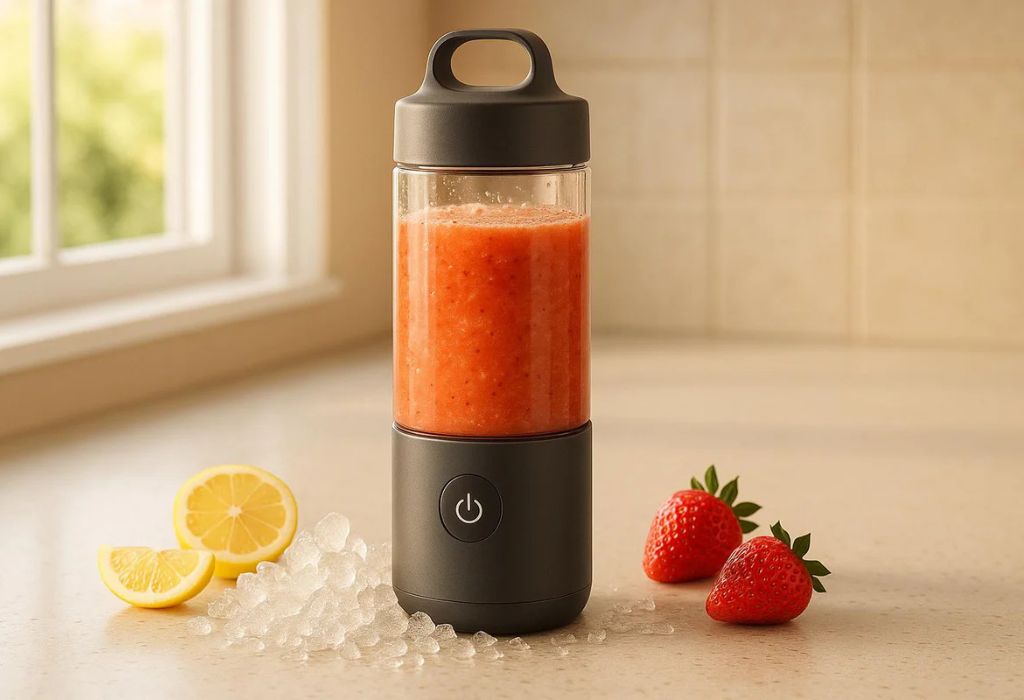
Personal blenders, such as older Magic Bullets or entry-level Hamilton Beach models, are designed for soft ingredients and liquids. Their small blades can’t absorb the shock of frozen cubes. Over time, blending ice in them can dull the blades, strip internal gears, or crack the jars.
Cordless or rechargeable portable blenders, popular for travel smoothies, also fall into this category. While they’re handy for on-the-go use, their limited voltage and battery power make them unsuitable for hard ingredients. Ice blending in such devices can cause stalling or irreversible battery drain.
Immersion blenders are another no-go. Their exposed blades and low wattage aren’t designed for dense or frozen solids. At best, they’ll chip the ice; at worst, they can damage countertops or bend blades.
In essence, if your blender wasn’t marketed specifically with “ice crush” or “frozen drink” capabilities, avoid testing its limits. Stick to pre-chilled ingredients or crushed ice made by other means.
The easiest rule to remember: if you have to ask whether it can blend ice, it probably shouldn’t.
Extending Your Blender’s Lifespan
A blender is an investment — and just like any appliance, maintenance determines how long it performs at its best.
After each use, rinse immediately with warm water to prevent food particles from hardening around the blade assembly. Once a week, deep clean with a drop of mild soap and a pulse cycle. Avoid dishwashers for the base or blades, as extreme heat and moisture can damage seals.
Store your blender jar dry and upright to prevent odors or bacteria buildup. If you often blend ice, inspect the blade edges monthly. Dull or bent blades can cause the motor to work harder, shortening its life.
Use your blender within its capacity. Ice, frozen fruit, or nuts should be blended in short bursts. Continuous operation for more than 60 seconds on heavy loads can overheat even high-power blenders.
Finally, keep your blender unplugged when not in use and periodically check the cord for frays or damage. Little habits like these keep your blender running smoothly for years — ensuring your frozen drinks stay frosty and your investment worthwhile.
The Future of Ice-Blending Technology
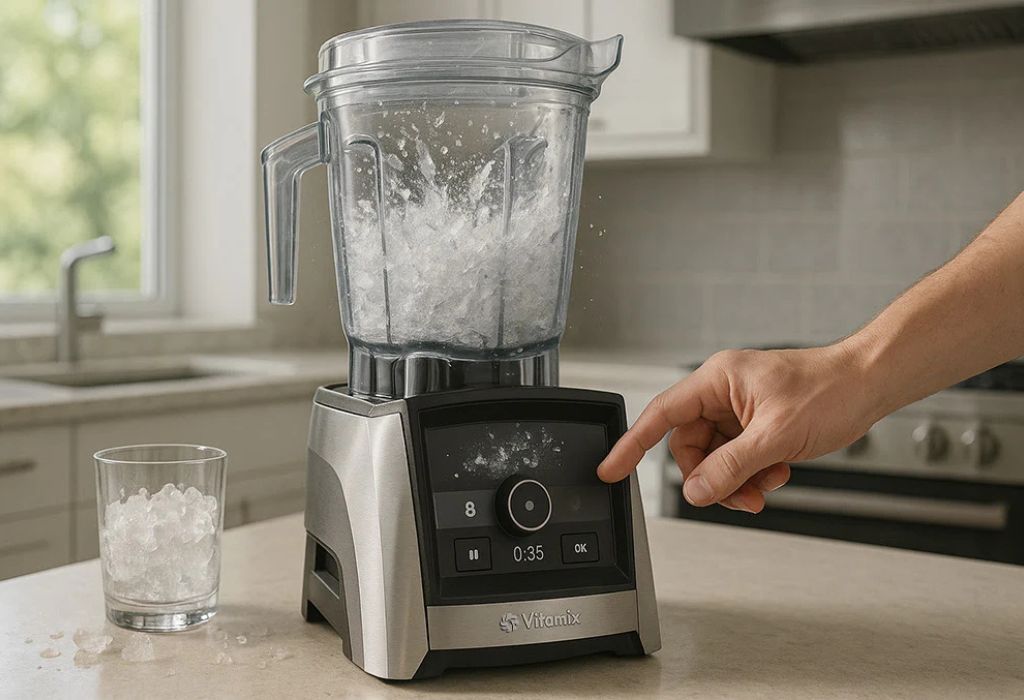
Modern blenders are becoming smarter, stronger, and more energy-efficient. Brands like Vitamix, Ninja, and KitchenAid are developing models that automatically adjust power based on ingredient density, using sensors to detect resistance levels during blending.
This means the next generation of blenders won’t just handle ice better — they’ll adapt to it. Intelligent speed control minimizes strain while maximizing consistency. Some even feature cooling systems that prevent overheating during tough blends.
Jar design is evolving, too. Reinforced Tritan materials now offer glass-like clarity with extreme impact resistance, eliminating cracking issues. Meanwhile, blade technology is shifting from sharpness to geometry — relying on shape and momentum rather than sharp edges to crush ice effectively.
As sustainability grows in importance, manufacturers are reducing noise, energy consumption, and plastic waste without compromising strength. The result is an appliance that’s as eco-conscious as it is powerful.
In the coming years, “Can all blenders blend ice?” might no longer be a question — because every blender will be built to handle it safely, efficiently, and intelligently.
FAQ’s-can all blenders blend ice
Can all blenders blend ice safely?
No, not all blenders can handle ice. Only those with powerful motors (at least 1000 watts) and strong blades are designed to crush ice effectively without damage.
Why do some blenders struggle with ice?
Ice is extremely dense, and low-wattage blenders can’t generate enough torque to crush it. This strain causes overheating, dull blades, or even motor burnout.
Which blenders work best for blending ice?
Models from brands like Vitamix, Ninja, and KitchenAid perform best. They use hardened stainless-steel blades and durable jars built to withstand impact and cold.
Can a personal blender crush ice?
Most small or portable blenders cannot. They lack the power and blade design for hard solids like ice cubes and are better suited for soft fruits or liquids.
Is it safe to put ice in a glass blender jar?
Yes, but only if the jar is thick, tempered glass or Tritan plastic. Thin or old glass jars can crack under sudden temperature change or impact.
Should I add liquid when blending ice?
Absolutely. Adding liquid first helps create movement and reduces friction on blades. Always follow the “liquid first, ice last” rule for best results.
What wattage is needed for crushing ice?
A blender with at least 1000 watts is ideal. Anything lower risks jamming or damaging the motor during repeated ice-blending sessions.
Can immersion blenders crush ice?
No. Immersion blenders are not designed for hard ingredients like ice. Their exposed blades and low torque can chip or bend on contact.
Does blending ice dull blender blades?
Over time, yes. Even tough blades wear slightly with frequent ice use. Regular cleaning and maintenance can extend their sharpness and life.
What’s the best way to blend ice smoothly?
Use small ice cubes, pulse in short bursts, and ensure enough liquid is present. This prevents overloading the motor and ensures an even, slush-like texture.
Conclusion
So, can all blenders blend ice? The short answer is no — but the long explanation reveals why. Ice demands mechanical strength, blade engineering, and torque that not every blender possesses.
High-performance blenders from brands like Vitamix, Ninja, and KitchenAid excel at crushing ice smoothly, while smaller or low-wattage models struggle and risk damage. If you frequently make frozen drinks, smoothies, or frappes, investing in a dedicated ice-crushing blender is a decision that pays off.
Remember to use good technique: liquid first, ice last, short pulses, and proper maintenance. Respect your blender’s limits, and it will reward you with years of reliable service.
At the end of the day, blending ice is less about brute force and more about smart design and care. Choose wisely, blend responsibly, and you’ll enjoy perfect frozen textures every time — without burning out your machine or your patience.

I’m Emma J. Caldwell, the founder, lead writer, and home-cooking enthusiast behind KitchenGuideCo.com. With a background in culinary arts and over a decade of cooking experience in both professional and personal kitchens, I created this platform to demystify recipes, offer smart kitchen gadget reviews, and guide readers through meal prep with confidence and clarity.