Many home cooks struggle when they try to prepare more than one dish in the oven at the same time. Different temperatures, cooking times, and moisture levels often create confusion and ruined meals. This problem becomes even more stressful during family dinners and special occasions.
Cooking multiple dishes in one oven is not guesswork when the correct method is followed. The oven works as a controlled heat chamber that can be managed with planning and proper airflow.
Understanding how heat, rack position, and timing work together makes multi dish cooking reliable.
This guide explains how to cook multiple dishes in the oven step by step in a practical way. Each stage focuses on real oven behavior instead of theory. By the end, simultaneous oven cooking will feel organized and predictable.
How Oven Heat Circulates When Cooking Multiple Dishes
Oven heat moves in three main ways which are conduction, convection, and radiation. Hot air circulates naturally while heating elements provide radiant energy. Both forces interact with cookware surfaces during multi dish cooking.
When more dishes are added, airflow becomes restricted inside the oven. Blocked airflow creates hot and cool zones that affect cooking uniformity. This is why spacing and rack positioning are critical.
Heavy cookware absorbs more heat and changes surrounding air temperature. This can slow down cooking for nearby lighter dishes. Proper placement prevents heat imbalance inside the oven chamber.
Top heating elements often deliver stronger radiant heat than bottom elements. This affects browning rates on upper racks more aggressively. Lower racks usually cook more steadily with slower surface coloring.
Side walls reflect heat back toward the center of the oven cavity. Overcrowding reduces this reflection pattern. Food then receives uneven heat exposure.
Balanced airflow is the foundation of successful multi dish oven cooking. Without proper circulation, even correct temperatures fail to produce even results.
Understanding Rack Position for Multiple Dishes
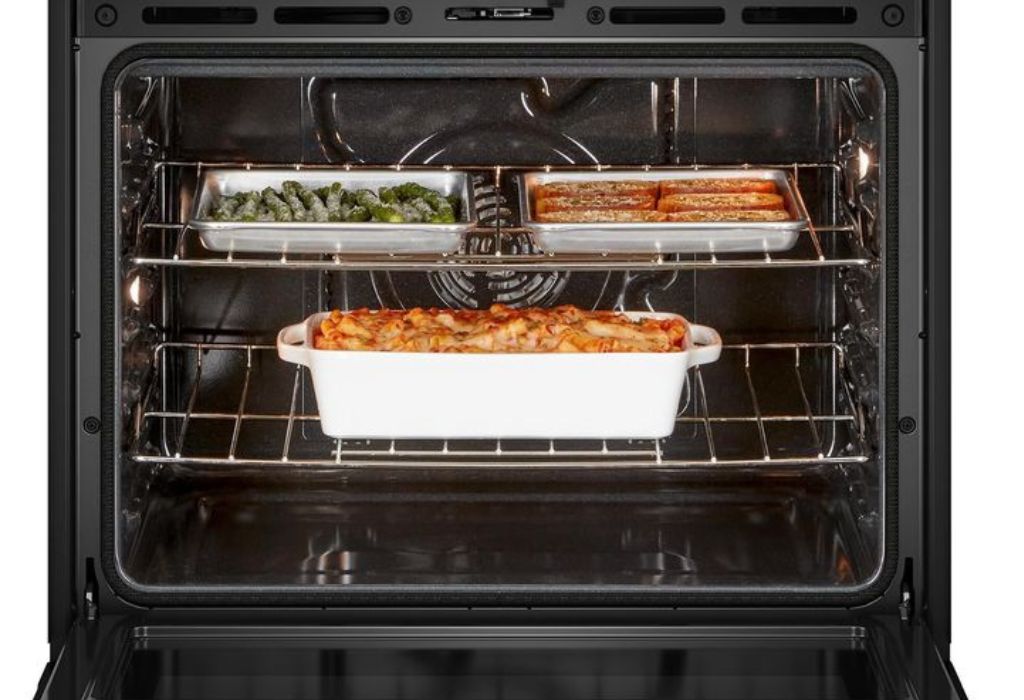
The middle rack provides the most even heat exposure inside standard ovens. It receives balanced heat from both top and bottom elements. This makes it ideal for delicate baking dishes.
The upper rack cooks faster on the surface due to radiant top heat. It is best suited for broiling, browning, or melting cheese toppings. Using it for slow baking often causes overbrowning.
The lower rack receives stronger bottom heat. It works well for roasting meats and baking items that need crisp bases. Pies and bread often benefit from lower rack placement.
When using multiple racks at once, heat distribution becomes divided. One rack may cook faster than the other depending on oven design. Rotation during cooking becomes necessary in these cases.
Using more than two racks at once increases airflow restriction significantly. This reduces oven efficiency and extends total cooking time. Extra time compensation becomes mandatory.
Proper rack strategy allows different foods to cook evenly without flavor transfer. Misplacement causes undercooked centers and burnt surfaces.
How to Match Different Cooking Temperatures in One Oven
Different dishes often require different oven temperatures. Cooking multiple dishes means finding a compromise temperature. The goal is to avoid burning one dish while undercooking another.
Foods that cook within 25 degrees of each other can usually share an oven safely. For example, 350 and 375 degree dishes can cook together with timing adjustments. Larger temperature gaps require sequencing instead of simultaneous baking.
Lower temperature dishes can be started first. Higher temperature dishes can be added later once preheating adjustments are made. This staggered timing prevents thermal shock.
Insulated cookware slows heat transfer effectively. This allows high temperature foods to share space with lower temperature foods safely. Glass and ceramic dishes provide natural thermal buffering.
Foil tenting reduces surface browning for sensitive dishes. This technique protects lower temperature foods from overheating. It also stabilizes moisture loss.
Temperature compromise is always paired with time adjustment. Conservative temperature control ensures all dishes finish properly.
Timing Strategy for Multiple Dishes in the Oven
Timing determines success when cooking multiple dishes together. Each dish has its own thermal response curve inside the oven. Matching these curves prevents overcooking or dryness.
The dish with the longest cook time should always enter the oven first. This establishes a stable heat cycle before adding delicate items. Late additions experience a controlled environment.
Short cook time dishes should enter the oven near the final cooking window. This preserves freshness and texture. It also prevents unnecessary moisture loss.
Carryover heat continues cooking food even after oven removal. This effect must be calculated when timing multiple dish removal. Removing too late causes overcooking.
Rotating dishes halfway through cooking equalizes exposure. This compensates for airflow limitation caused by overcrowding. Rotation ensures uniform surface coloration.
Using separate timers for each dish prevents tracking confusion. This keeps removal precise and avoids guess based timing.
How to Control Moisture and Odor When Cooking Multiple Dishes
Moisture released from food rises and circulates inside the oven chamber. When too much steam builds up, baked goods become soggy and meats lose surface texture. Managing moisture is essential for proper browning and structure.
Dishes with high water content should be placed on the upper rack. Rising steam escapes more efficiently from the top of the oven. This prevents moisture from settling onto delicate baked items below.
Lidded cookware traps steam inside heavy moisture producing dishes. This prevents vapor from spreading across the oven interior. Covered dishes reduce flavor mixing and condensation buildup.
Uncovered roasting pans increase evaporation speed. This works well for meats that need surface crisping. However, they should be positioned away from cakes and bread.
Odor transfer happens when aromatic vapors circulate freely. Strong foods like fish and spiced meats release persistent aromas. These odors can absorb into baked goods if not managed.
Using oven-safe charcoal filters or active ventilation reduces odor buildup. Briefly cracking the oven door between dish rotations can also release trapped vapors. Proper airflow keeps flavors separated.
Using Convection Mode for Multiple Dishes in the Oven
Convection mode uses a fan to circulate hot air evenly throughout the oven cavity. This improves uniform heat exposure across multiple racks. It reduces hot and cool zones naturally.
When using convection, cooking temperature should be reduced by about 25 degrees. The improved airflow increases heat transfer efficiency. Lower thermal input prevents overcooking.
Convection mode delivers faster surface drying. This benefits roasted vegetables and meats significantly. It can dry out cakes and pastries if airflow is too aggressive.
Lightweight baked goods should be shielded using partial foil tenting. This controls surface drying caused by constant air movement. Moist interiors require gentler airflow exposure.
Rotating dishes becomes less critical in convection mode. The fan equalizes heat distribution automatically. This reduces the need for frequent rack swapping.
Convection works best when at least two racks are occupied. Too few dishes reduce airflow efficiency. Moderate oven loading produces optimal convection performance.
How to Prevent Uneven Browning Across Multiple Dishes
Uneven browning occurs when radiant heat hits certain dishes more directly. Upper racks receive stronger top heat compared to lower racks. This causes faster surface coloring on upper foods.
Using dual level foil shields reflects excess radiant heat. These shields protect the most exposed dish surfaces. Balanced radiant exposure improves uniform browning.
Dark metal pans absorb and radiate heat faster than light colored pans. Mixing pan types inside one oven causes inconsistent browning speeds. Matching cookware material reduces thermal mismatch.
High sugar foods brown faster than low sugar foods. Placing sweet baked goods away from direct heating elements prevents premature darkening. Sugar reacts quickly to radiant energy.
Rotating dishes front to back compensates for door side cooling differences. The oven door area is cooler due to heat leakage. Rotation equalizes exposure over total cook time.
Monitoring surface color visually is critical in multi dish cooking. Thermostat control does not account for individual dish composition. Visual judgment finalizes perfect browning.
Professional Techniques for Large Batch Oven Cooking
Professional kitchens rely on staggered loading for multi dish operation. Dishes enter and exit the oven in controlled sequences. This keeps oven temperature stable through continuous use.
Preheating fully for at least 25 minutes ensures thermal mass stability. A stable oven interior prevents temperature collapse when multiple cold dishes enter. This improves cooking consistency.
Thermal buffering is used through stacked ceramic or stoneware. These materials absorb and release heat slowly. This moderates temperature swings during batch cooking.
Professional chefs group foods by moisture output rather than by type. Dry roasting items cook together while high steam items are isolated. This prevents cross moisture interference.
Timed venting releases excess vapor at controlled intervals. This preserves crisp surfaces while preventing oven humidity buildup. Controlled venting improves texture across simultaneous dishes.
Multiple probe thermometers track internal temperatures of several dishes at once. This removes guesswork from batch cooking. Data driven timing prevents over and undercooking.
Common Mistakes to Avoid When Cooking Multiple Dishes
Overcrowding the oven is the most common beginner mistake. Too many dishes block airflow and trap moisture. This causes steaming instead of baking or roasting.
Ignoring dish weight differences creates uneven thermal response. Heavy dishes cook slower than light dishes even at identical temperatures. This imbalance ruins synchronization.
Failing to adjust temperature for convection usage leads to overcooked surfaces. Many users forget to lower the temperature when switching modes. This causes premature browning.
Opening the oven door repeatedly causes temperature collapse. Each opening releases accumulated heat rapidly. This extends cooking time and destabilizes delicate recipes.
Mixing sweet and savory dishes without odor control creates flavor contamination. Aromatic transfer occurs quickly inside enclosed heat chambers. Desserts often absorb strong food odors.
Using only one timer for multiple dishes leads to tracking errors. Each dish requires independent monitoring. Separate timing prevents rushed or delayed removal.
Special Considerations for Baking and Roasting Together
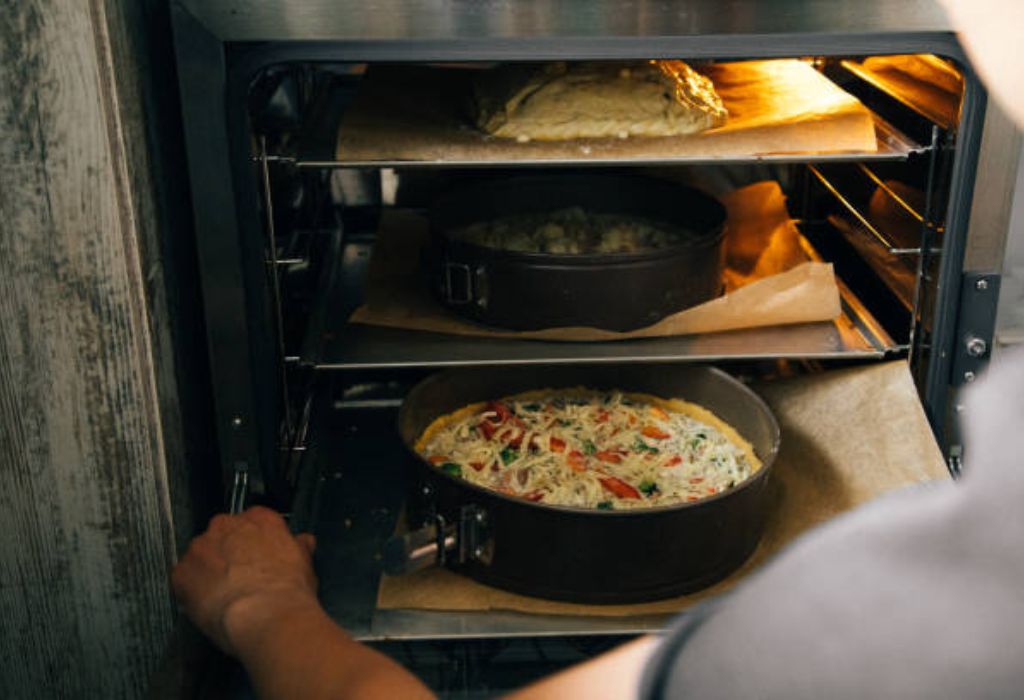
Baking requires steady temperature and controlled moisture. Roasting produces fluctuating moisture and higher surface heat. Combining both demands careful placement strategy.
Baked goods should be placed on upper racks away from roasting meat vapors. Rising steam from meats interferes with cake structure. Separation preserves texture and rise.
Roasting dishes generate grease vapors during high heat exposure. These vapors coat oven surfaces quickly. Shielding baked items prevents surface oil contamination.
Lower rack roasting provides optimal browning without drying upper level baking items. Heat naturally rises and equalizes gradually. This preserves internal moisture balance.
Using roasting racks elevates meats and allows vapor drainage. This prevents excessive moisture accumulation on lower oven surfaces. Dry heat improves roasting quality.
When baking and roasting together, roasted items should enter first. Baked goods should enter only when roast vapors stabilize. This sequencing reduces moisture conflict.
Oven Multi Dish Cooking Questions Answered
Can I bake and roast at the same time in one oven?
Yes, but placement and moisture control are critical. Proper rack separation prevents texture problems.
Do multiple dishes increase overall cooking time?
Yes, because airflow and thermal mass change. Time must be extended slightly in most cases.
Is convection better for cooking multiple dishes?
Yes, convection promotes even heat circulation. It reduces hot spots and uneven cooking.
Can odors mix between dishes inside the oven?
Yes, strong aromas transfer through circulating air. Odor control methods reduce contamination.
Should I rotate dishes during multi dish cooking?
Yes, rotation equalizes exposure to heat zones. It improves browning consistency.
Does dish size affect cooking order?
Yes, larger and heavier dishes cook slower. They should be loaded earlier.
Can foil be used to protect delicate dishes?
Yes, foil shields excess radiant heat. It prevents premature surface darkening.
Is it safe to cook desserts with meat in one oven?
It is safe but odor transfer may occur. Proper separation minimizes flavor mixing.
Why do some dishes dry out faster than others?
Moisture loss varies by food composition and airflow exposure. Convection increases drying speed.
Does multi dish cooking use more energy?
No, it often saves energy by consolidating oven use. Total runtime is reduced overall.
Conclusion
Cooking multiple dishes in the oven at the same time is a controlled system rather than a chaotic process. Heat circulation, rack placement, and moisture control determine the success of every dish. When these factors are managed correctly, multi dish cooking becomes reliable and efficient.
The oven behaves differently when loaded with several dishes. Airflow restriction, thermal mass, and vapor circulation all influence cooking outcomes. Understanding these interactions removes uncertainty from the process.
Timing strategy allows dishes with different cooking requirements to finish together. Staggered loading and independent timers keep every dish on schedule. Proper sequencing prevents texture failure.
Moisture and odor control protect flavor and surface quality. Covered cookware, rack separation, and ventilation techniques prevent steam interference. These steps maintain crisp textures and pure flavors.
Avoiding common mistakes such as overcrowding and poor temperature adjustment improves consistency. Convection mode further enhances performance when used correctly. Balanced planning ensures even results across all racks.
With proper technique, a single oven can handle complex multi dish meals smoothly. Organized heat management transforms busy cooking into an efficient workflow. Mastery of multi dish oven cooking saves time, energy, and effort in every kitchen.

I’m Emma J. Caldwell, the founder, lead writer, and home-cooking enthusiast behind KitchenGuideCo.com. With a background in culinary arts and over a decade of cooking experience in both professional and personal kitchens, I created this platform to demystify recipes, offer smart kitchen gadget reviews, and guide readers through meal prep with confidence and clarity.